
Method 1: Pour boiling water on the weeds. Simple boiling water can kill weeds and may even prevent the germination of existing seeds. Generously pour boiling water in all of the cracks in your patio. You may need to repeat this method 2 or 3 times to see significant results. Be careful not to burn yourself! You can repeat this method as often as you like. Be careful as of course, just as boiling water kills weeds, it can also kill our valuable plants if not carried out properly. A kettle with a spout is good to use as the spout allows you to direct the flow of water right on the weeds, while the kettle retains most of the heat. Pour slowly, especially if there is grass nearby or ornamental plants that might be damaged. Method 2: Apply white vinegar to the weeds. Vinegar contains acetic acid, which kills vegetation. Regular white vinegar has a concentration of 5% acid, and pickling vinegar has a 7% concentration. Either of these will work well. You can poke holes in the vinegar cap for a handy way to distribute the “weed killer.” You can apply straight vinegar to weeds or use the following recipe: 1 gallon (3.87 litre) of vinegar (5% or 7% pickling vinegar) + 2 Tbs. (29.5 ml) dish soap + ½ cup (480 ml) salt. This works best when applied during the midday sun. Reapply every 4 to 6 weeks. Method 3 Use salt to kill the weeds. Create a saltwater solution that is 3 parts water to 1 part salt and pour in the patio cracks. Once the weeds begin to die, sprinkle some dry salt in the areas where you see the highest concentration of weeds. If you are not seeing fast enough results, you can increase the concentration of salt in your solution. You can repeat this method every 3 to 6 weeks. Method 4 Sprinkle baking soda in the cracks. Sprinkle baking soda generously all over your patio, and then use a broom to sweep it into cracks. Finish by spraying your patio down with water. You can apply baking soda after a heavy rain and skip the watering. This method works best in the spring or autumn. You can repeat this method every 4 to 6 weeks.
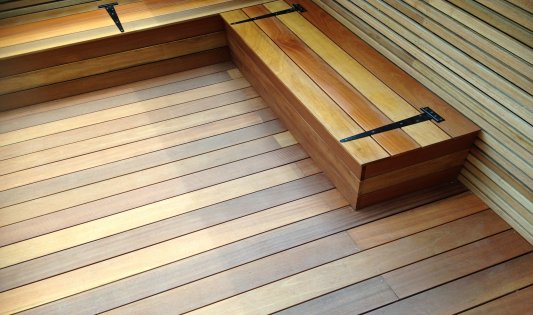
What Is Hardwood Decking
Hardwood decking looks beautiful and is a warm and natural material. Hardwood decking is made from slow growing trees, which are often referred to as broadleaved trees. It has a higher density than softwood, which gives it enhanced durability and strength. Some commonly used hardwoods for decking are Balau, Ipe and Garapa. It is a more expensive option than softwood decking as the wood is more costly and takes more expertise to install. Hardwood decking is more resistant to warping and splitting. It comes in a range of colours and finishes to suit all projects. The wood can be stained to give you a choice of colours to match a theme in your garden. As with all wood products you need to carry out maintenance by cleaning regularly and treating with a decking oil annually to ensure that your decking continues to look great and last a long time. If not treated then it will start to fade to grey. If it does start to fade to grey then use a wood cleaner and colour restorer and then protect it with a wood finish of your choice. Most oils are clear but you can get tinted wood oils. If you would like to discuss a hardwood decking project please get in touch for a free consultation. We cover East London and West Essex.

